


Solid wood furniture brings natural warmth, character, and lasting value to a home. Every piece has its own grain pattern, color variation, and texture. Although quality wood furniture is made for long-term use, it still needs the right care to remain stable and attractive.
Fortunately, learning how to care for solid wood furniture is not difficult. The most important habits are simple: control moisture, protect the surface from heat and sunlight, clean gently, and deal with spills quickly. This guide explains how to maintain solid wood furniture safely, whether the surface is painted, lacquered, oiled, or waxed.
1. Understand the Wood and Its Finish
Before choosing a cleaner or polish, identify the furniture’s surface finish. The finish acts as a protective layer, and different finishes require different maintenance methods.
Lacquered, varnished, and polyurethane-coated furniture usually has a sealed surface that can be dusted or cleaned with a slightly damp cloth. Oiled wood may need a compatible maintenance oil from time to time. Waxed furniture may require occasional rewaxing, while painted wood needs protection from abrasive cleaners.
If you are unsure about the finish, check the manufacturer’s care instructions. You can also test any new cleaning product on a small, hidden area first. This simple step helps prevent discoloration, cloudiness, or changes in sheen.
2. Control Humidity and Room Temperature
Wood naturally responds to its environment. It can absorb moisture when the air is humid and release moisture when the air is dry. As a result, small seasonal movements are normal. However, extreme or rapid changes may cause warping, cracking, loose joints, or doors and drawers that no longer align correctly.
For most homes, a stable indoor relative humidity of approximately 40% to 60% is a practical target. Avoid placing furniture directly beside radiators, fireplaces, heating vents, air conditioners, or powerful dehumidifiers. These locations can create sharp temperature and humidity differences across the furniture.
During a dry winter, a humidifier may help. In a humid season, ventilation, air conditioning, or a dehumidifier can reduce excessive moisture. Most importantly, make changes gradually. A steady indoor climate is better for wood than repeated swings between very dry and very damp conditions.
The Canadian Conservation Institute also emphasizes a stable environment in its guidance on the basic care of wooden furniture.
3. Protect Furniture from Direct Sunlight
Sunlight can gradually change the color of natural wood and some finishes. Dark woods may become lighter, while other species may develop a deeper or warmer tone. This color development can be part of the beauty of real wood, but uneven exposure may leave visible outlines beneath lamps, books, or decorative objects.
Use curtains, blinds, or UV-filtering window film in rooms with strong sunlight. If practical, rotate decorative items every few weeks so the surface ages more evenly. However, do not expect the original color to remain completely unchanged. Natural aging is a characteristic of genuine wood.
4. Dust Solid Wood Furniture Regularly
Regular dusting is one of the safest maintenance steps. Dust may look harmless, but small particles can act like fine abrasives when dragged across a surface.
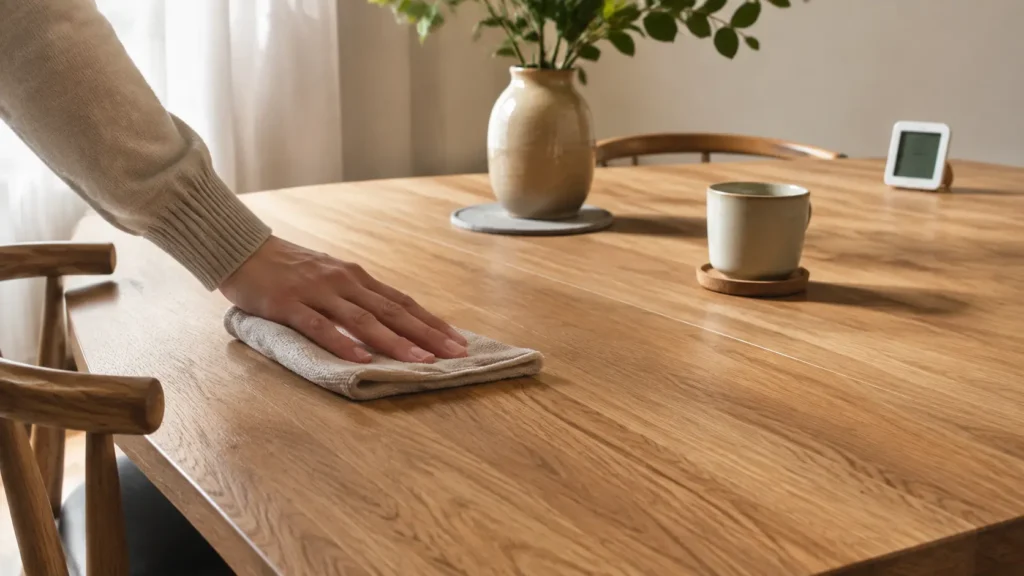
Use a microfiber or soft cotton cloth. Wipe gently in the direction of the grain, especially on open-grain species such as oak. For carved details or grooves, use a clean, soft-bristled brush. Avoid rough cloths and heavy pressure.
Weekly dusting suits frequently used furniture. A dining table may need attention more often, while a display cabinet may need less.
5. Clean with as Little Moisture as Possible
An important part of learning how to care for solid wood furniture is limiting moisture. For light cleaning, slightly dampen a soft cloth with clean water and wring it out thoroughly. The cloth should feel barely damp rather than wet. Wipe the surface gently, and then dry it immediately with another clean cloth.
If water is not enough, use a small amount of mild, pH-neutral soap diluted in water. Apply it to the cloth rather than spraying the furniture. Then remove any residue with a separate barely damp cloth and dry the area.
Do not let water collect around joints, edges, hardware, or gaps. In addition, avoid steam cleaners. Steam can penetrate small openings, affect the finish, and encourage wood movement.
6. Deal with Spills Immediately
Quick action reduces the risk of staining. Blot a spill with a clean, absorbent cloth instead of rubbing it across the surface. Start at the outside edge and work inward to keep the liquid from spreading. Next, wipe the area with a barely damp cloth if necessary, and dry it completely.
Water, coffee, wine, oil, and colored sauces can leave marks. Alcohol, perfume, nail polish remover, and strong solvents are particularly risky because they may damage certain finishes.
For a stubborn stain, do not reach for bleach, baking soda, toothpaste, or an abrasive pad. These remedies can alter the sheen or create a pale patch. Consult the supplier’s instructions or a professional furniture restorer.
7. Prevent Heat, Water Rings, and Surface Damage
Daily protection is easier than repairing a finish. Use coasters under cold drinks and heat-resistant mats under hot dishes. Choose trivets with a soft underside. Tablecloths and placemats also help, but clean the table first because trapped particles can cause fine scratches.
Never place an extremely hot object directly on wood. Heat can leave white marks, soften a coating, or cause discoloration. Likewise, do not leave wet glasses, flowerpots, or damp cloths on the furniture.
Use felt pads beneath lamps, vases, and accessories. Lift objects rather than sliding them. On a desk, place a protective pad beneath paper because writing pressure can mark softer wood.
8. Use Polish, Wax, and Oil Carefully
More polish does not mean better protection. Some sprays leave residue that attracts dust or complicates refinishing. Therefore, use only products compatible with the existing finish.
Sealed surfaces may need routine cleaning but little additional treatment. Oiled furniture, on the other hand, can benefit from suitable maintenance oil when it becomes dry. Waxed furniture may need a thin new coat when it loses its luster.
Follow the maker’s directions for product choice and frequency. Apply a thin, even layer with the grain, and remove excess product. Too much oil or wax can create stickiness or dirt buildup. Dispose of oily cloths according to the product’s fire-safety instructions.
9. Handle Scratches, Dents, and White Marks Correctly
Minor wear is normal, especially on dining tables, desks, and other frequently used pieces. A small surface scratch may sometimes be reduced with a manufacturer-approved touch-up marker or repair wax in a matching color. Test the color in a hidden location before applying it to a visible area.
Deep scratches, dents, chipped edges, peeling finish, or cracks require more care. Spot sanding can create a noticeable difference in color and sheen, while water or steam can damage the finish. Professional repair is safer when damage reaches bare wood or affects a prominent surface.
White rings often come from moisture or heat trapped in a finish. Because finishes react differently, one home remedy will not suit every case. Avoid high heat from an iron or hair dryer. Instead, ask the manufacturer or a repair specialist for advice.
10. Adjust Your Care with the Seasons
A short seasonal inspection helps you notice problems early. At the beginning of summer and winter, check the room’s humidity, look for new gaps or cracks, and make sure furniture has enough distance from heating and cooling equipment.
Also clean behind large pieces, rotate accessories exposed to sunlight, and inspect the finish. If an oiled or waxed surface appears dry, follow the recommended schedule rather than automatically adding more product.
Seasonal movement does not always indicate poor quality. A solid wood tabletop or door may expand in humid months and contract in dry months. Good construction allows for this movement.
Common Solid Wood Furniture Care Mistakes
Even well-intentioned cleaning can shorten the life of a finish. Avoid these common mistakes:
- Using all-purpose cleaners without checking whether they are safe for wood
- Spraying liquid directly onto the surface
- Cleaning with rough sponges, scouring powders, or abrasive pads
- Leaving spills, wet glasses, or damp decorations in place
- Placing furniture next to strong heat or air-conditioning vents
- Applying oil to a sealed finish that cannot absorb it
- Using too much wax or polish
- Dragging heavy objects across a tabletop or floor
- Attempting aggressive DIY repairs before identifying the finish
A Simple Maintenance Schedule
Once you understand how to care for solid wood furniture, a simple routine makes the work easy. Use this schedule for reference:
- Daily:Wipe up spills immediately and use coasters, mats, and felt pads.
- Weekly:Dust with a soft microfiber or cotton cloth.
- As needed:Clean with a barely damp cloth and dry the surface at once.
- Every few months:Check hardware, joints, sunlight exposure, and indoor humidity.
- Seasonally:Inspect the furniture for movement, dryness, cracks, or finish damage.
- According to the maker’s instructions:Reapply compatible oil or wax only when required.
Final Thoughts on How to Care for Solid Wood Furniture
The best way to care for solid wood furniture is to create a stable environment and use gentle, consistent maintenance. Protect it from extreme humidity, direct heat, strong sunlight, standing water, and abrasive cleaners. At the same time, respond quickly to spills and inspect hardware before small problems become serious.
Good care begins with understanding the wood, construction, and finish. It also begins with well-made furniture that uses properly prepared materials, suitable joinery, and an appropriate protective coating. Manna Harmony Home manufactures solid wood furniture for global residential and commercial markets, with OEM and ODM support for different designs, materials, finishes, and care requirements. Contact our team to discuss a custom furniture collection for your market.
